Top 10 Ways to Layer Lighting in a Home Office

Time:2026-10-30 Author:Charlotte
0%

A home office can look bright yet still feel tiring after an hour of emails. The issue is often not too little light, but light coming from only one direction. Learning how to layer lighting in a home office means combining general, task, and accent light so each supports a different need. It also means noticing what the room actually does: where the screen sits, how daylight moves, and which corners stay dim.

Lighting designer Randall Whitehead has described lighting as “the jewelry of a room.” That image is useful here. A ceiling fixture sets the scene, while a desk lamp puts light where a hand writes or a page lies open. A small wall or shelf light can soften the background during video calls. The layers should work together, not compete. Start with the room’s existing daylight, then add fixtures where shadows or glare remain. A lamp aimed at a glossy monitor may look attractive, but it can become annoying quickly.

The ideas ahead explore ten practical ways to build that balance, from choosing warmer bulbs to positioning task lights beside—not behind—the screen. Small adjustments matter. So does testing them at different times of day. No formula fits every desk; even a carefully planned setup may leave one corner oddly dark. Treat that as useful feedback, not failure. The goal is comfortable, adaptable light that helps you focus without making the office feel like a showroom.
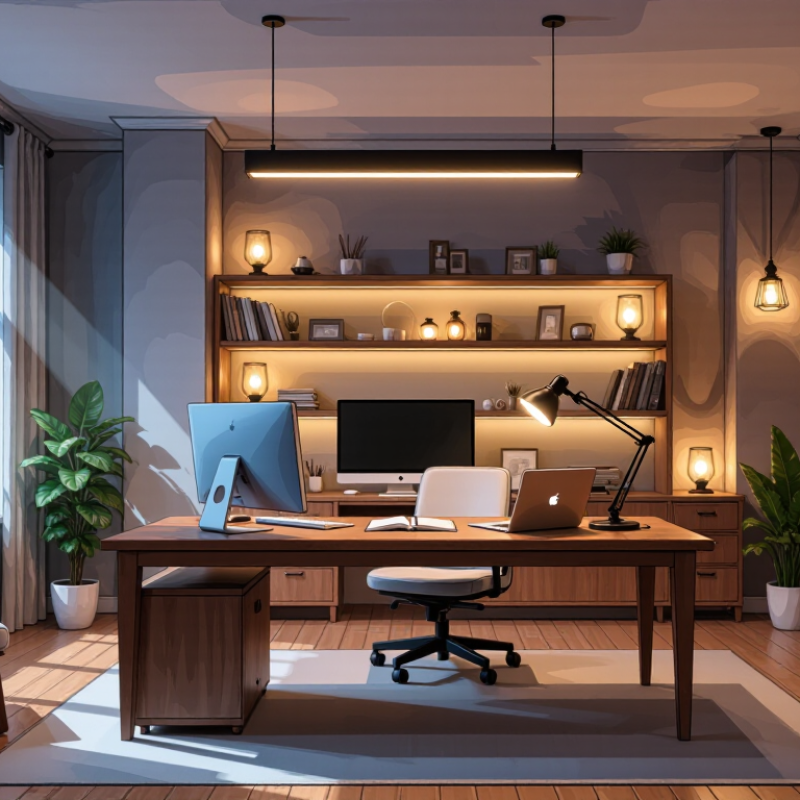
Top 10 Ways to Layer Lighting in a Home Office

Assess the Room’s Layout, Daylight, and Lighting Needs

Before choosing lamps, map the office as it is used. Note the desk’s position, screen direction, doorways, shelves, and any corners where papers disappear into shadow. Sit in the chair and look for glare on the monitor. A bright window behind the screen may create reflections; a window beside the desk often gives more even daylight. Small changes matter.

Observe the room at different times, not just on a sunny morning. Cloud cover, nearby buildings, and seasonal shifts can change daylight considerably. Watch it change. If sunlight lands directly on your keyboard in the afternoon, a sheer shade or a slight desk adjustment may help more than another lamp. I have found that people often underestimate how much a dark bookcase affects the room’s overall feel.

Then list the tasks the office must support. Video calls need soft light on the face, while reading plans or handwritten notes calls for focused, adjustable light. General room lighting can reduce the contrast between a bright screen and dark surroundings. Check the ceiling fixture, too; one overhead source may leave your hands shadowed. There is no perfect layout. Test a setup for a few workdays, notice where your eyes feel strained, and adjust one light at a time.

Build an Even Base Layer with Ambient Light

Ambient light should make the whole home office comfortable before task lamps are switched on. It softens the contrast between a bright desk and darker corners, which can feel tiring during long work sessions. Start broad. A ceiling fixture with a diffused shade can spread light across the room without creating a hard pool on the floor. If the room has one, a wall light aimed upward can bounce light off the ceiling and reduce sharp shadows.

Choose a warm-neutral color temperature, often around 3000K to 4000K, and adjust it to suit the room and your screen use. The right level depends on wall color, ceiling height, and daylight. Pale walls reflect more light; dark finishes absorb it. I’ve found that one overhead fixture rarely reaches every corner evenly, especially beside tall shelves or a deep desk. Add a second ambient source if those areas stay gloomy, then sit at the desk and check for glare on the monitor. A dimmer helps, though it may not solve uneven lighting by itself. Not perfect. Test the setup on a cloudy afternoon and again after dark, when the room reveals its weak spots.

Add Focused Task Lighting at Desks and Work Zones

Focused task lighting should brighten the work area without washing out the whole room. Place an adjustable desk lamp beside your monitor, then angle it toward paper or tools rather than the screen. This reduces reflections and keeps the brightest light where your eyes need it. For a left-handed person, positioning the lamp on the right can help prevent hand shadows, and vice versa. In practice, the first placement is rarely the best.

Tips: Sit at your desk after dark and check for glare on the monitor. Move the lamp a few inches at a time. A shaded, adjustable head helps direct light without shining into your eyes.

Match the lamp’s reach to the tasks you actually do. A broad pool of light suits sketching or sorting documents; a narrower beam can work for close reading. Choose a comfortable brightness, and avoid a harsh contrast between a bright desktop and a dark room. If you use a window during the day, adjust the lamp as daylight shifts. It can take a few tries. Notice when you squint, lean forward, or cast a distracting shadow, then reposition the light before adding another fixture.

Top 10 Ways to Layer Lighting in a Home Office

Add Focused Task Lighting at Desks and Work Zones

Layer ambient light with focused desk lighting: use roughly 100–300 lux for general room lighting, 300–500 lux for common desk work, and 500–1,000 lux for detailed tasks. These are practical target ranges, not code requirements. Measure light on the work surface and adjust the lamp to reduce glare and screen reflections.

Use Accent Lighting to Highlight Details and Add Depth

Accent lighting can turn a home office from a flat work surface into a room with visible depth. Direct a small adjustable lamp toward a textured wall, framed print, or shelf of reference books. The brighter detail draws the eye, while softer surrounding light keeps the contrast comfortable. A warm pool on wood grain can also soften a room dominated by screens and pale walls. Keep the beam out of your direct sightline. Glare makes even a beautiful detail tiring to look at. Accent lighting can feel fussy at first; move the lamp, then live with the setup for a day.

Tips: Start with one feature, not every shelf. Aim light across a surface to reveal texture. Use a dimmer if available, and check reflections on your monitor from your seated position.

For balance, let accent light support—not compete with—your desk lamp. The Illuminating Engineering Society’s office-lighting guidance emphasizes suitable task lighting and glare control. The U.S. Department of Energy reports that LEDs use at least 75% less energy and last up to 25 times longer than incandescent bulbs. That makes efficient LED fixtures practical for details you may illuminate daily. Still, these figures do not guarantee a comfortable result; placement and brightness matter. A shadow beneath a shelf can add depth, but too much contrast may leave the whole corner feeling dim.

Top 10 Ways to Layer Lighting in a Home Office - Use Accent Lighting to Highlight Details and Add Depth
Lighting idea What it highlights Where to place it Practical layering tip
1. Picture lights Artwork, framed prints, or a pinboard Above the display, angled toward its surface Choose a shielded or adjustable fixture to reduce glare on glass and keep light off the monitor.
2. Adjustable accent spotlights A plant, sculpture, or architectural feature On a ceiling track or nearby shelf, aimed at the feature Aim the beam away from the screen and glossy desk surfaces to avoid distracting reflections.
3. Shelf lighting Books, objects, and the depth of open shelving Under shelf edges or along the inside of a bookcase Use diffused, low-glare lighting so individual light points are not visible from the chair.
4. Wall-washing light Textured walls, paint, or a feature wall Near the wall, directed upward or across its surface A broad, even wash can make a small office feel more open without relying on a bright point source.
5. Backlighting behind a monitor The wall behind the screen and the work zone's visual depth Behind the monitor, directed toward the wall rather than the viewer Keep it subtle and steady; avoid placing a visible bright source in the line of sight.
6. Toe-kick or desk-base lighting The desk silhouette and floor area Under a desk, cabinet, or low shelf Use a low output level as a visual accent, not as a substitute for task lighting.
7. Picture-rail or ceiling-edge lighting Wall details and the room's upper edges Along a picture rail or concealed near the ceiling Conceal the source where possible so the room receives the glow without direct glare.
8. Accent lamp on a side table Nearby decor and a darker corner On a side table or cabinet outside the main work area A shade helps soften the light; keep the lamp out of the direct reflection path of screens.
9. Niche or cabinet lighting Objects displayed in a recessed niche or glass-front cabinet Inside the cabinet or at the top of the niche Use a diffuser and keep the light level modest to prevent hotspots on reflective surfaces.
10. Layered dimming and separate controls The contrast between the desk, display, and surrounding room Use separate switches or compatible dimmers for accent and general lighting Adjust accent lights independently so decorative highlights add depth without competing with focused work lighting.

Layer, Control, and Adjust Light for Comfort Throughout the Day

A comfortable home office needs more than one bright ceiling light. Start with soft, even ambient light that fills the room without washing out the screen. Then add a focused desk lamp for reading notes or checking small details. Aim its beam at the work surface, not directly at your eyes. A small lamp behind a monitor can soften the contrast between the screen and a dim wall. Keep it subtle.

Light changes as the day moves. In the morning, open blinds where possible and let daylight reach the desk. If sunlight creates glare, shift the monitor or use a shade rather than squinting through it. On cloudy afternoons, raise the ambient light and bring the task lamp closer. Separate switches or dimmers make these adjustments easier. Small changes matter.

At night, lower the overall brightness and keep enough light to move around safely. Warm-toned light can feel gentler in the evening, while neutral light may help with color-sensitive tasks. The right balance depends on the room, your work, and your eyes. It is easy to overcomplicate this. Try one adjustment at a time, and notice whether shadows, reflections, or eye strain improve. A setup that feels comfortable at noon may need a different setting after sunset.

FAQS

Why use ambient light before switching on a desk lamp?

It softens the contrast between a bright desk and dark corners. Long work sessions may feel less tiring.

What kind of ceiling light spreads light across a room?

A fixture with a diffused shade can soften the overall light. Tall shelves may still leave gloomy patches.

What color temperature is a useful starting point?

Around 3000K to 4000K often works well. Adjust it for your wall color, daylight, and screen use.

How can I brighten a dim corner near a desk?

Add another ambient light if the area stays gloomy. An upward-facing wall light can bounce light off the ceiling.

Where should I aim an adjustable desk lamp?

Direct it toward paper or tools, not the monitor. Move it a few inches at a time and check for reflections.

Which side of the desk should hold the lamp?

A left-handed person may place it on the right to reduce hand shadows. Reverse that for right-handed work.

How can I tell if task lighting feels uncomfortable?

Notice if you squint, lean forward, or cast a distracting shadow. A bright desk against a dark room can feel harsh.

When should I test my lighting setup?

Check it on a cloudy afternoon and again after dark. It may take retries. A dimmer helps, but uneven light can remain.

Conclusion

Creating a comfortable home office starts with understanding how the room is used. Notice where daylight enters, identify areas that feel dim or create glare, and consider the different tasks you do during the day. Build an even base layer of ambient light to brighten the room without relying on a single harsh source. Then add focused task lighting near desks and work zones so reading, writing, and screen-based work are easier on the eyes.

To explore how to layer lighting in a home office, think beyond brightness alone. Accent lighting can draw attention to artwork, shelves, or architectural details while adding visual depth. Choose lights that work well together, and use adjustable controls to change their intensity as daylight shifts or tasks change. A balanced combination of ambient, task, and accent light can make the office feel more inviting while supporting comfort and focus throughout the day.

Charlotte

Charlotte

Charlotte is a seasoned marketing professional with a deep understanding of the company's portfolio and a passion for elevating its presence in the market. With a keen eye for detail and a commitment to excellence, she ensures that our professional blog is regularly updated with insightful articles......