A reading nook should feel inviting before you open a book. Yet the wrong light can cause eye strain, glare, or a room that feels more like an office. The best lighting combines gentle ambient light with a focused reading lamp, so the space feels calm while the page stays clear. A warm white bulb, often around 2700 to 3000 kelvins, can create a relaxed mood. Still, personal comfort matters more than a number on a package. Some readers prefer a brighter, more neutral light, especially for small print.
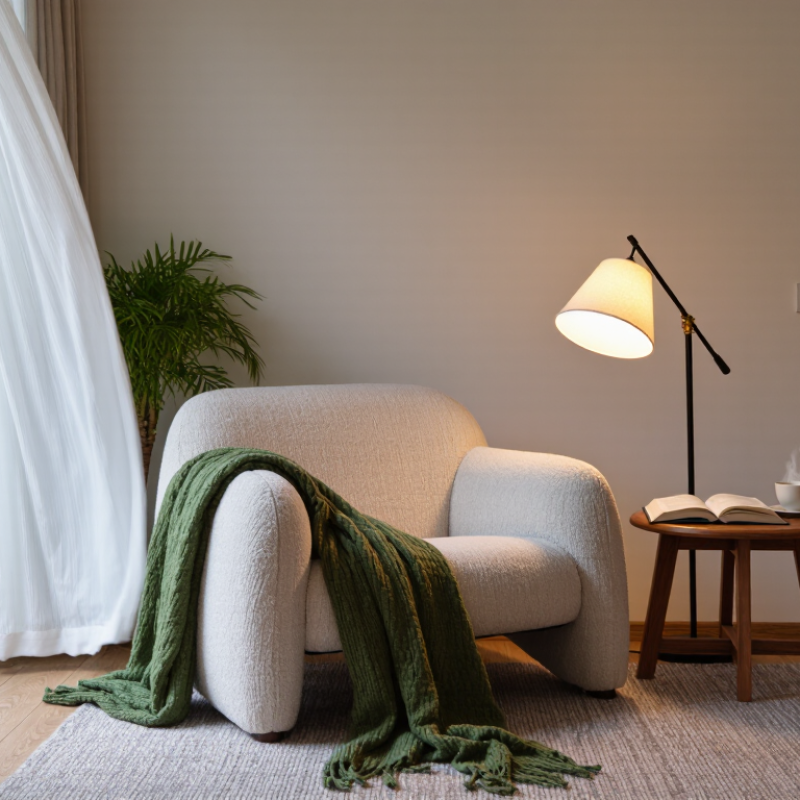
If you are wondering how to create a cozy reading nook with lighting, start by noticing how daylight moves through the room. Add a shaded floor or table lamp near your chair, and direct its beam toward the book rather than your eyes. Keep the bulb out of your direct line of sight. A dimmer can help the nook shift from daytime reading to a quiet evening pause. Small details count. A pale wall can reflect light, while a dark shade may absorb more of it. There is no perfect setup for every home; even a beautiful lamp can cast an annoying shadow if placed poorly. This guide explores practical lighting choices, placement, color, and common mistakes, helping you build a nook that feels personal, comfortable, and usable—not merely attractive in a photograph.
Set Page Brightness: Check IES Guidance of 30–50 Footcandles for Reading
A cozy reading nook needs light that reaches the page, not just the walls. A commonly used IES-based target for reading is about 30–50 footcandles at the page. Footcandles measure light arriving on a surface, so check the open book rather than the bulb or tabletop. Recommendations can vary with the task and reader, but this range gives you a useful starting point. A small adjustable lamp can help keep the light close to the page. Aim it from the side to reduce hand shadows, and avoid a bright reflection across glossy paper. Check the page at your usual reading distance.
Numbers are helpful, but they do not tell the whole story. A room can measure well and still feel harsh. Look up from the book: if the lamp seems glaring, soften or redirect it. If the print looks dim, adjust the lamp or move it closer, then check again. A light meter can offer a more consistent reading, though phone apps are only rough estimates. I would not treat 30–50 footcandles as a magic setting; eyesight, page color, and surrounding light all matter. The setup may need another small adjustment tomorrow.
What Is the Best Lighting for a Cozy Reading Nook?
Reading task lighting is commonly cited at 30–50 footcandles (fc). These bars show illustrative target points within that range; adjust the light to suit your comfort and the room.
Aim the Task Light: Keep the Beam on the Page and Out of Your Eyes
A cozy reading nook needs light that feels calm, but the page still has to be clear. Place a task light beside or slightly behind your shoulder, then angle its beam down across the book. The light should land on the paper, not shine directly into your eyes. Sit in your usual reading position while adjusting it. A lamp that seems well placed from across the room may glare when you lean back.
Look for a shade or adjustable head that controls the beam. Keep the bulb out of your direct line of sight, and watch for bright reflections on glossy pages. If you read with your right hand, a light on your left can reduce hand shadows; reverse that arrangement if you’re left-handed. A warm, comfortable light can make the nook feel inviting, while a dim room around a very bright page may strain your eyes. Add gentle ambient light if the contrast feels harsh. Not too much.
Small adjustments matter. Move the lamp a few inches, tilt the book, and check again. I sometimes find the “perfect” angle changes once I settle into the chair. That’s normal. The useful test is simple: can you read without squinting, seeing glare, or constantly shifting your head?
What Is the Best Lighting for a Cozy Reading Nook? — Aim the Task Light: Keep the Beam on the Page and Out of Your Eyes
| Lighting Dimension |
Practical Target |
How to Set It Up |
| Light on the page |
About 300–500 lux for comfortable close reading |
Aim the task light at the book or e-reader, then adjust brightness for the page, print size, and your eyesight. |
| Beam direction |
The beam covers the reading area without shining toward your face |
Position and angle the lamp so its light lands on the page, not directly in your line of sight. |
| Shade and glare control |
The bulb or LED source is shielded from direct view |
Choose an adjustable shade or diffuser; check that glossy pages and screens do not show distracting reflections. |
| Color temperature |
Around 2700–3000 K for a warm, cozy atmosphere |
Use a warm-white light for an inviting nook; choose a dimmable lamp if you want to adjust the mood. |
| Color rendering |
CRI 90 or higher is a useful target for natural-looking colors |
Check the light’s color-rendering specification if accurate color appearance matters in the room. |
| Ambient light |
Soft surrounding light, with the task light brighter on the page |
Add a shaded floor lamp or gentle room light to reduce the contrast between a bright page and a dark room. |
| Adjustability |
A flexible arm or adjustable head that stays in position |
Place the lamp where it lights the page evenly without blocking your view or casting a hand shadow while turning pages. |
Quick check: Sit in your usual reading position. You should see the page clearly, while the light source itself stays out of your eyes.
Choose a Warm White: Compare 2700 K and 3000 K Light Sources
What Is the Best Lighting for a Cozy Reading Nook?
A cozy reading nook needs light that feels gentle but still makes text easy to read. Warm white bulbs around 2700 K create a soft, amber glow. They suit evening reading and pair nicely with wood, woven blankets, and muted colors. The trade-off is that 2700 K can look too yellow in a dim corner, especially beside cream-colored pages.
A 3000 K light is still warm, but it appears a little cleaner and brighter. It can help printed text look more distinct without the cool, clinical feel of daylight-toned lighting. For many readers, a shaded lamp near the chair works well at either color temperature. The shade helps reduce glare, while an adjustable arm lets you direct light onto the page. I once chose a very warm bulb for a small nook, and the room felt lovely—but the page looked dull. A slightly brighter setting fixed most of it.
Tips: Try both temperatures after sunset, when you usually read. Check the page from your seat, not from across the room. If your eyes feel strained, adjust the lamp’s position or brightness before changing the whole setup. Your preferred warmth may shift with wall color and eyesight.
Check Color Rendering: ENERGY STAR Lamps Require a CRI of at Least 80
A reading nook should feel warm without making the page look yellow or dull. Check the lamp’s color rendering index, or CRI, before choosing a bulb. ENERGY STAR lamps require a CRI of at least 80. That rating indicates how faithfully a light source shows colors compared with natural light. It is useful when paper, book covers, and nearby fabrics share the same small space.
CRI matters more than many readers expect. Under a poor-quality light, cream paper can look gray, and colored print may seem flat. A CRI of 80 or higher usually gives a more natural appearance, though it does not guarantee perfect color. I have noticed that two bulbs with similar brightness can make the same page feel quite different. One may soften the room; the other can make the paper look oddly harsh. Check the printed specifications, not just the package’s warm-looking image.
Try a high-CRI bulb with a warm color temperature, around 2700K to 3000K, for a relaxed evening feel. Aim the shade so light falls across the pages without shining into your eyes. A bulb that is too dim can still strain your eyes, even with excellent color rendering. Test it in your actual nook. Wall paint and lampshades can shift the effect, and I would not trust my first impression every time.
Balance the Nook: Pair Focused Task Lighting with Softer Ambient Light
What Is the Best Lighting for a Cozy Reading Nook?
Balance the Nook: Pair Focused Task Lighting with Softer Ambient Light
A comfortable reading nook needs light on the page without turning the whole room into a bright workspace. Aim a shaded floor or table lamp toward your book, slightly above shoulder height. This helps reduce glare and keeps the bulb out of your direct line of sight. The Illuminating Engineering Society’s lighting guidance commonly places reading tasks around 300–500 lux, though the right level depends on print size, age, and eyesight. A dimmable lamp makes that range easier to adjust. Try it at dusk, when the page can look brighter than it does in daylight.
Then soften the surroundings. A warm, indirect lamp or wall light can lift dark corners and ease the sharp contrast between the page and the room. Keep ambient light lower than the task light, but not so low that the nook feels like a spotlight in a cave. Small detail: test the setup with your actual book. Glossy pages may reflect light in ways a paper sample will not. For efficient bulbs, the U.S. Department of Energy reports that LEDs use at least 75% less energy and last up to 25 times longer than incandescent lighting. Still, color and placement matter more than efficiency alone. A beautifully efficient bulb can feel harsh if it shines straight into your eyes.
Conclusion
Creating a comfortable reading nook starts with lighting that makes text easy to see without causing glare or eye strain. Aim for roughly 30–50 footcandles on the page, in line with common IES reading guidance, and position a task light so its beam falls on the book rather than shining directly into your eyes. A warm white source can add a relaxing feel: 2700 K tends to appear softer, while 3000 K offers a slightly crisper warmth.
Color rendering also matters. Look for a lamp with a CRI of at least 80 so colors appear reasonably natural. For a balanced space, combine focused task lighting with softer ambient light, adjusting both to suit the room and your reading habits. Together, these choices explain how to create a cozy reading nook with lighting that is inviting, practical, and comfortable for longer reading sessions.

 Q-Link Lighting