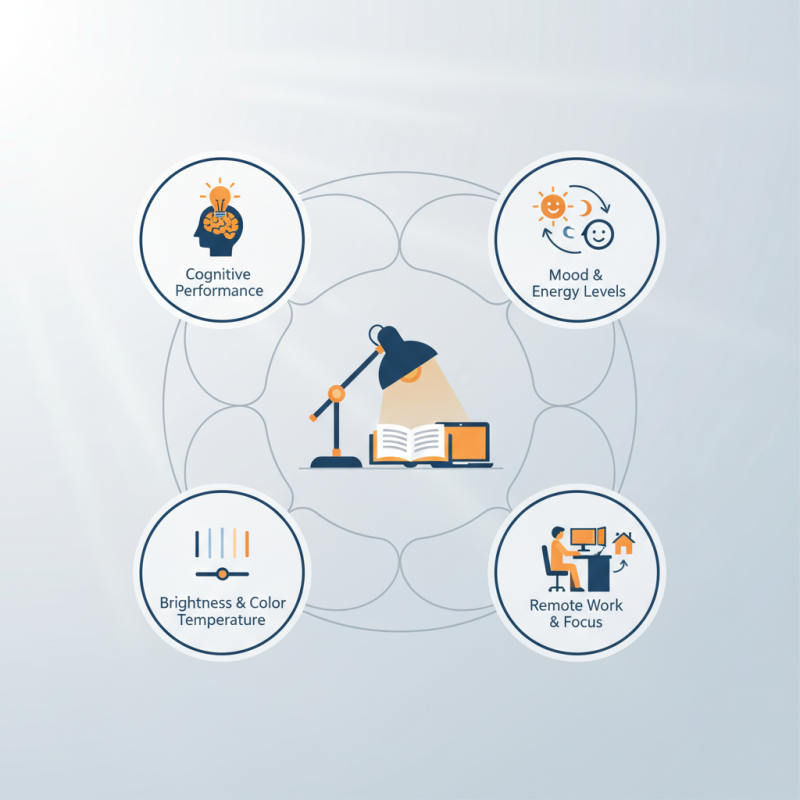
As we look ahead to 2026, the question arises: can a desk lamp improve productivity? The role of lighting in workspaces is often underestimated. A well-designed desk lamp can create an environment that promotes focus and efficiency. Brightness, color temperature, and adaptability are essential factors. These elements influence our mood and energy levels throughout the day.
In an age where remote work and flexible hours are commonplace, the right lighting can make a significant impact. A desk lamp does more than illuminate; it can set a tone for creativity or concentration. Studies suggest an ideal lighting setup enhances cognitive performance. However, not all lamps are suitable for everyone. Personal preferences play a crucial role in how effective a lamp can be.
While many assume that all desk lamps provide the same benefits, this isn’t true. Choosing the right lamp requires reflection on individual needs and workspace dynamics. Exploring different types can lead to surprising outcomes, both positive and negative. Ultimately, can a desk lamp improve productivity? The answer may vary, but the right choice could illuminate a path to greater achievement.
Desk lamps have undergone significant transformations over the years. In the early days, these lamps were simple fixtures offering basic functionality. Bulbs provided limited light, often casting harsh shadows. Their primary purpose was utility, with little thought given to design or aesthetics.
As technology advanced, so did the evolution of desk lamps. In the 1980s and 1990s, design became a focal point. Sleek shapes and vibrant colors emerged. LED technology further revolutionized the landscape. Now, desk lamps can adjust brightness and color temperature. These features allow users to create an optimal work environment. But with all this advancement, some might wonder if these features are really necessary.
Today, many people overlook the impact of lighting on productivity. A well-lit workspace can significantly enhance focus. However, not all get the balance right. Overly bright or dim lighting can distract and cause strain. Reflecting on your workspace is crucial. Are you optimizing your environment for peak performance? Remember, even the most advanced desk lamp needs to suit individual needs.
The relationship between light and productivity is well-documented. Research indicates that lighting significantly influences our cognitive performance. In a study published by the Journal of Environmental Psychology, proper illumination can improve focus and task efficiency by up to 15%. This suggests a direct link between quality lighting and enhanced productivity levels.
In a typical office setting, the right desk lamp can create a more conducive work environment. Studies from the Lighting Research Center show that exposure to bright, cool light can enhance alertness and mood. This is particularly vital during winter months when natural light is scarce. Those who use full-spectrum lighting report feeling more energized and engaged in their work. However, it's worth noting that overstimulation from overly bright lights can lead to fatigue, highlighting the need for balance.
Creating an ideal workspace should consider both brightness and color temperature. Some experts recommend a range of 3000K to 5000K for desk lamps, as this mimics daylight and fosters productivity. However, excessive brightness may cause glare and discomfort. Finding the right light not only supports effective working but also establishes an environment that promotes well-being. Each workspace is unique, and individual preferences play a crucial role in determining the most effective lighting solutions.
| Light Type | Color Temperature (K) | Lumens | Impact on Focus (%) | Impact on Mood (%) |
|---|---|---|---|---|
| Incandescent | 2700 | 800 | 60 | 50 |
| Fluorescent | 4100 | 1000 | 70 | 40 |
| LED | 5000 | 1600 | 85 | 65 |
| Halogen | 3000 | 900 | 75 | 55 |
| Natural Light | 6500 | 10000 | 90 | 80 |
Selecting the right desk lamp can significantly enhance your focus while working. Studies show that appropriate lighting improves task performance by up to 30%. This improvement stems from reduced eye strain, which often results from poorly lit environments. A lamp with adjustable brightness and color temperature allows for personalized settings that cater to various tasks. For example, a warmer light can create a calming environment, while cooler tones can boost alertness.
When searching for a desk lamp, consider the design and functionality. A lamp equipped with features like USB ports and wireless charging can eliminate clutter. Many users prefer lamps with flexible arms for customizable positioning. According to a recent report, ergonomic designs can reduce physical strain by 20%, promoting healthier work habits. Additionally, a lamp that minimizes glare can help maintain a clear focus on tasks.
However, not every lamp meets these criteria. Some models may provide insufficient light output or lack adjustability. It's crucial to assess your workspace conditions and opt for a lamp that suits your individual needs. A little deliberation can lead to choices that genuinely enhance productivity. Remember, even small adjustments in your workspace can lead to significant changes in focus and efficiency.
The desk lamp of 2026 will likely incorporate advanced technologies. Imagine lamps that adapt to your mood and energy levels. These innovative designs can adjust brightness and color temperature based on the time of day. Natural light mimicking features could help reduce eye strain during long hours.
Smart desktop integration is another exciting trend. Desk lamps may sync with productivity apps to provide reminders or focus intervals. This functionality can create a more engaging workspace. However, reliance on technology can sometimes distract rather than enhance focus. Balancing smart features with simplicity is essential.
The design of desk lamps could evolve as well. Expect sleek, minimalistic forms that blend seamlessly with modern interiors. Sustainable materials might become standard, reflecting a growing accountability to the environment. Yet, one must ask—will these changes truly lead to better productivity? Understanding the interplay between lighting and work habits will be essential for optimizing these innovations.
In the fast-paced world of 2026, the ambiance of your workspace plays a critical role in productivity.
Desk lamps can create a focused environment. Proper lighting reduces eye strain, enhances mood, and improves clarity. A well-lit space encourages better work habits.
Consider the ergonomic placement of your desk lamp. Position it to avoid glare on screens. An adjustable lamp allows for optimal lighting angles. This small adjustment can lead to significant improvements in focus.
Here are some tips to enhance workspace ambiance:
1. Choose bulbs with a warm color temperature. They provide a calming effect.
2. Mix task lighting with ambient lighting. This combination affects your mood positively.
3. Ensure your workspace is decluttered. A tidy space can greatly improve your cognitive function.
Reflect on your current setup. Is your desk lamp serving its purpose? Sometimes, we overlook how minor changes can lead to better productivity.
: Desk lamps evolved from basic fixtures to stylish designs with advanced features like adjustable brightness and color temperature.
Good lighting reduces eye strain, enhances focus, and improves mood, leading to better work habits.
Place your desk lamp to avoid glare on screens. Adjust the angle for optimal lighting.
Use warm color bulbs, mix task and ambient lighting, and keep your space decluttered.
Advanced features help create an optimal work environment, but reflect on your own needs first.
Overshadowing bright lights or too dim lighting can distract and cause strain. Balance is key.
Ergonomic placement reduces glare and allows for optimal angles, which can improve focus.
Yes, a decluttered space can enhance cognitive function and lead to better productivity.
Sometimes, small changes like lamp positioning can make a big difference in work efficiency.
No, each person has different needs. Always assess if your lamp fits your individual requirements.
The article "Can a Desk Lamp Boost Your Productivity in 2026?" explores the multifaceted relationship between lighting and workplace efficiency. It begins with a brief overview of the evolution of desk lamps, highlighting how design and functionality have changed over time. The discussion then delves into the science of light and how various lighting conditions can significantly affect focus and productivity levels.
Key features to consider in a desk lamp include adjustable brightness, color temperature, and ergonomic design to foster a conducive working environment. Looking ahead to 2026, the piece emphasizes technological innovations that promise to enhance user experience further. Ultimately, it poses the compelling question: can a desk lamp improve productivity? By considering aspects such as ambiance and ergonomic design, it suggests that the right lighting can play a crucial role in maximizing workspace efficiency and overall output.

Q-Link Lighting