Choosing the right shade can transform an ordinary lamp into a balanced, purposeful feature. Yet many people focus only on color and overlook proportion, shape, and light direction. Learning how to match a lamp shade to a lamp base helps create a safer, more comfortable, and visually cohesive room.
This guide explores ten practical shade-and-base combinations for bedrooms, living rooms, offices, and entryways. It considers drum, empire, bell, globe, cone, and rectangular shades. Each type changes how light spreads across a table, wall, or reading chair. A shade that is too narrow may make a heavy base look unstable. One that is too wide can overwhelm a small table. A useful starting point is choosing a shade with a diameter close to the base height. However, that rule is not perfect. Sculptural bases, oversized furniture, and low ceilings may require a different proportion. Measure before shopping. Check the harp height, socket position, and available table space. A cream linen shade may soften a dark ceramic base, while a crisp white shade can sharpen brushed metal. Material matters too. Translucent fabric creates gentle ambient light, while opaque metal directs stronger downward illumination. Small details count. The lower shade edge should usually sit near the base’s widest point, but personal style still matters. Even experienced designers sometimes test two options under evening light. That final check can reveal glare, shadows, or an unexpectedly warm color. The best choice balances appearance, function, and the room’s everyday needs.
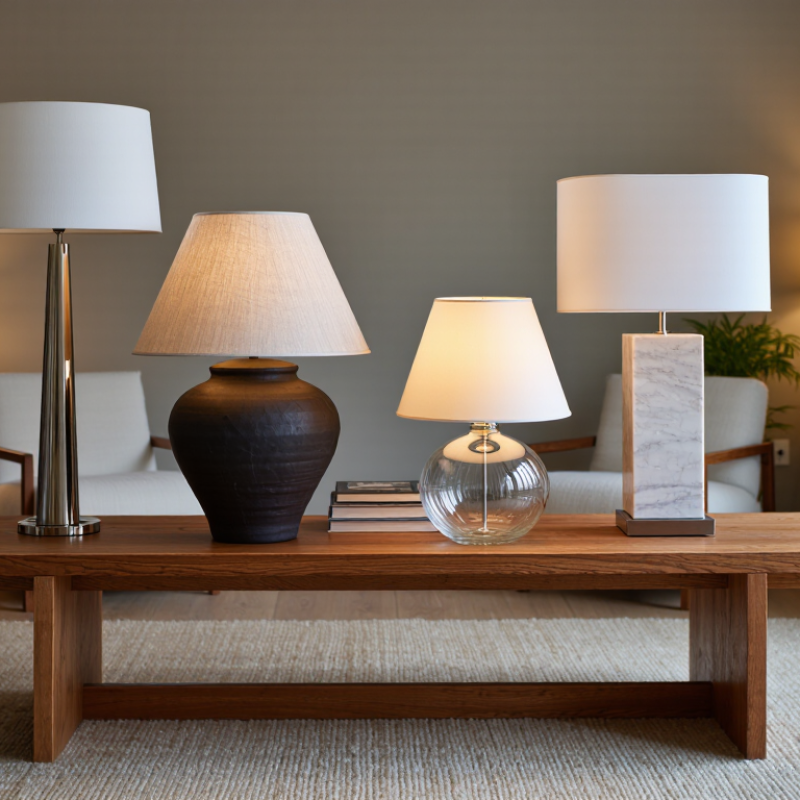
A well-matched lamp begins with proportion, not decoration. For a table lamp, the shade’s width usually works best at about twice the base’s widest measurement. Its height should be roughly two-thirds of the visible base height. Measure the base without the finial, socket, or harp. These proportions keep the lamp visually grounded and reduce the risk of a heavy-looking top.
The IES Lighting Handbook identifies glare control, luminance, and visual comfort as essential lighting-design concerns. A shade that is too short can expose the bulb and create sharp glare. A shade that is too deep may hide useful light and appear oversized. ENERGY STAR reports that LED bulbs use up to 90% less energy than incandescent bulbs and can last up to 25 times longer. That lower heat output allows more shade-material flexibility, but clearance still matters. Check the socket rating and manufacturer instructions. Never let fabric touch the bulb.
In practical work, I compare the shade diameter with the table surface, not only the base. A narrow table needs a narrower profile. A broad console can accept a wider drum or empire shade. Keep the bottom edge near eye level when seated. It feels comfortable.
The rule is not sacred. Symmetry can fail in a small room. I sometimes choose a slightly taller shade when the base looks visually weak, then reassess it from several angles. A paper template helps. Small changes are surprisingly noticeable.
Matching a lamp shade to its base begins with observing the base’s silhouette, not its color. In my experience, a round base usually looks balanced beneath a drum, globe, or cylinder shade. These shapes repeat the base’s soft curves. A narrow column works well with an empire or tapered drum shade. The wider lower edge adds visual stability. Keep it proportional. The shade should often be wider than the base, but not dramatically larger.
For a square or rectangular base, try a square, rectangular, or oval shade. A square shade echoes sharp corners, while an oval shade softens them slightly. Bell shades suit traditional, sculpted bases because their curved edges create a gentle transition. Coolie shades direct light downward and can suit slim bases used beside reading chairs. A pleated shade adds texture, although it may compete with an already detailed base. Less can work better.
Globe shades pair naturally with rounded or geometric bases. Their even glow is useful on consoles and bedside tables. Before choosing, check the lamp’s height, socket position, and available clearance. I once selected a shade that looked elegant but blocked the switch. That mistake changed my fitting process. Test the shade from several angles, including a seated position. The best match is not always the most stylish one; it should also feel stable, practical, and comfortable in daily use.
The chart shows practical starting widths for lamp shades commonly paired with different base shapes. In general, a shade is often selected at approximately 1.5–2 times the visible height of a table-lamp base, while floor-lamp shades use narrower proportions for stability and clearance. These measurements are design guidelines and should be adjusted for the room, bulb position, and overall silhouette.
Matching a lamp shade to its base is less about identical colors and more about visual balance. In my lighting work, I compare three factors: material, color, and texture. A ceramic base often suits linen because the fabric softens its hard surface. Glass pairs well with cotton or light silk, especially when the base feels reflective. Metal bases can handle canvas, pleated fabric, or woven shades. Keep the proportions honest. A wide base needs a shade with enough diameter to look stable.
Color should repeat, not copy. Pair a warm wood base with ivory, sand, or muted terracotta. A black base can support cream, charcoal, olive, or dusty blue. For a bright base, choose a quieter shade and echo one small color detail. I once matched a yellow base with a strong orange shade. It looked lively in daylight and harsh at night. That mistake taught me to test samples under the lamp’s actual bulb. Color shifts after sunset.
Texture adds depth when the palette stays restrained. Combine smooth glass with woven fibers, polished metal with soft pleats, or rough stone with brushed cotton. Avoid stacking too many bold surfaces. A ribbed base and heavily pleated shade may compete. Touch the materials before deciding. Photos can mislead. The best match may be slightly imperfect, with one contrast keeping the pair from feeling manufactured. Also check shade opacity: opaque fabric directs light downward, while translucent material creates a gentler glow.
Top 10 Types: How to Match a Lamp Shade to a Lamp Base?
Selecting the correct shade starts with proportion, not decoration. Measure the lamp base height and widest point. A practical guide is a shade width close to twice the base width. Shade height often works between one-third and two-thirds of the base height. This is not a sacred formula. A tall, narrow base may need an empire or drum shade, while a broad ceramic base suits a bell, oval, square, rectangular, pleated, tapered, cylinder, coolie, or clip-on shade. The final choice should protect the socket and balance the lamp visually.
Fitting type matters just as much. A spider fitter works with a harp and finial. An uno fitter attaches near the socket. A clip-on fitter suits small accent lamps, but it must sit securely. Check the socket diameter, harp height, and bulb clearance before buying. The U.S. Department of Energy’s Energy Saver report states that LED lamps use at least 75% less energy and last up to 25 times longer than incandescent lamps. Lower heat helps, but ventilation remains essential. The IES Lighting Handbook also stresses controlled glare and suitable light distribution.
Tips: Place the lamp beside a chair and check eye level. The shade should hide the bare bulb from normal viewing angles. Hold a paper mock-up around the base first. It may look awkward. That is useful evidence, not failure. Measure twice, then test the fitting.
| Matching Type | Typical Fitting | Recommended Shade Diameter | Recommended Shade Height | Base Compatibility | How to Match | Key Fit Check |
|---|---|---|---|---|---|---|
| 1. Classic Table Lamp | Spider fitting with harp and finial | Base height × 2, approximately 30–45 cm | About two-thirds of the base height | Traditional ceramic, wood, or metal table bases | Choose a shade that is visually wider than the base and balanced with its overall silhouette. | The shade should conceal the lamp socket and leave the finial accessible above the top. |
| 2. Small Bedside Lamp | Spider fitting or clip-on fitting | 20–35 cm | 15–25 cm | Compact bases used on nightstands or narrow tables | Use a relatively shallow shade to keep the lamp proportionate and avoid blocking nearby space. | Keep the total lamp height comfortable for reading; the bulb should remain fully covered. |
| 3. Tall Floor Lamp | Spider fitting with a larger harp | Base height × 0.35–0.50; commonly 40–60 cm | 30–45 cm | Tripod, column, and urn-style floor lamp bases | Select a broad shade that visually supports the height of the stand without appearing top-heavy. | The shade diameter should not extend so far that it becomes a walking hazard. |
| 4. Narrow Column Base | Spider fitting with harp and finial | Approximately 1.5–2 times the base width | About 60–75% of the base height | Slim cylindrical or rectangular table bases | A drum or empire shade adds visual width while preserving the elegant vertical profile. | Center the shade over the column and check that the base remains stable after fitting. |
| 5. Wide or Sculptural Base | Spider fitting or uno fitting, depending on socket design | Equal to or slightly wider than the widest base section | About one-half to two-thirds of the base height | Bulbous, sculptural, or heavily detailed bases | Use a simple shade shape so the base remains the visual focal point. | Avoid a shade that is narrower than the widest part of the base, which can make the lamp look unstable. |
| 6. Uno-Socket Lamp | Uno fitting mounted directly to the socket | Usually 30–45 cm for table lamps | Approximately 20–30 cm | Lamps with a downward-facing or threaded socket | Choose an uno-compatible shade that sits directly over the socket rather than using a harp. | Confirm the uno ring diameter and thread direction before purchasing the shade. |
| 7. Clip-On Accent Lamp | Clip-on fitting attached directly to the bulb | 10–20 cm for small decorative bulbs | 10–18 cm | Small accent lamps and exposed-bulb fixtures | Use a lightweight shade designed specifically for clip-on support and the bulb shape. | Check the maximum bulb diameter, clip tension, and heat clearance; do not use with bulbs that exceed the shade rating. |
| 8. Pendant or Hanging Fixture | Spider fitting, pendant frame, or shade carrier | Based on room scale; commonly 30–60 cm | 20–40 cm for medium fixtures | Ceiling-mounted pendant lights and hanging sockets | Match the shade diameter to the room and furniture scale rather than to a floor-standing base. | Allow adequate clearance from ceilings, walls, and combustible materials, following the fixture instructions. |
| 9. Multi-Light Base | Uno fitting, spider fitting, or multi-socket shade frame | Wide enough to cover all sockets; commonly 40–70 cm | Approximately one-half of the base height | Bases with two or more bulbs or branching arms | Select a wide, ventilated shade that distributes light evenly across the entire socket arrangement. | Verify that every bulb is within the shade’s wattage and heat-resistance limits. |
| 10. Adjustable or Swivel Base | Spider fitting or specialized adjustable adapter | Approximately 1.5–2 times the base width | About 50–70% of the visible base height | Reading lamps and articulated metal or wooden bases | Use a moderately lightweight shade that complements the movement and angle of the lamp. | Make sure the shade does not interfere with adjustment joints and that the base remains balanced at every angle. |
Matching a lamp shade to its base should support the room, not compete with it.
The ten most adaptable pairings include ceramic with linen, metal with cotton, glass with sheer fabric, wood with jute, and a sculptural base with a neutral drum shade.
Black bases suit white shades, while brass bases work well with pleated ivory shades. Rattan bases pair naturally with woven shades. Colorful bases need simple shades. Vintage bases often look balanced with empire shades, although this rule can feel too rigid.
Room scale matters.
A shade that is too small makes a substantial base look awkward. A shade that is too wide may crowd a narrow console.
In practice, I usually keep the shade width close to twice the base width, then adjust for the furniture around it.
The International Dark-Sky Association supports warmer, controlled lighting for comfortable nighttime environments. The U.S. Department of Energy reports that LED bulbs use at least 75% less energy than incandescent bulbs and last up to 25 times longer.
Choose a warm LED for bedrooms, living rooms, and wood-rich interiors. Cool light can make beige walls appear gray.
Tips:
Place the lamp beside the furniture it will serve.
Check the shade at eye level.
Look for glare.
A sample fabric helps.
Do not trust showroom lighting completely.
Test the lamp after sunset, because daytime judgment is often misleading.
Sometimes, the “perfect” pairing still feels wrong in the room.
That is useful feedback.
A shade often works well at about twice the base’s widest measurement. Measure the base without the socket, harp, or finial. This guideline is useful, but not absolute.
The shade height commonly ranges from one-third to two-thirds of the visible base height. A tall, narrow base may need a taller shade. I sometimes get this wrong.
Keep the bare bulb hidden from normal seated viewing angles. The lower shade edge should sit near eye level. A short shade can expose harsh light.
Tall bases often suit empire or drum shades. Broad bases can work with bell, oval, square, rectangular, or pleated shades. Try a paper template first.
A spider fitter usually connects with a harp and finial. An uno fitter attaches near the socket. A clip-on fitter suits smaller accent lamps. Check the socket size and fitting stability.
Compare the shade with the table surface, not only the lamp base. Use a narrower shade on a slim table. A wide console can support a broader drum shade.
Linen can soften ceramic, while woven materials complement wood or rattan. Simple shades usually suit colorful bases. Dark bases often pair well with light shades. The room may disagree.
Keep fabric away from the bulb and preserve sufficient ventilation. Check the socket rating and fitting instructions. LED bulbs produce less heat, but clearance still matters. Never assume cooler means risk-free.
Learning how to match a lamp shade to a lamp base begins with understanding proportion, balance, and visual harmony. The shade should complement the base without overwhelming it, while its shape should echo or thoughtfully contrast with the lamp’s structure. A drum shade can create a clean, modern appearance, while tapered, bell, or empire shapes may enhance more traditional designs. The shade’s material, color, and texture also influence the lamp’s character, so consider how they interact with the base and surrounding furnishings.
Size and fitting are equally important for both appearance and safety. Choose a shade that provides suitable coverage, leaves the lamp stable, and uses the correct fitting type for the socket. Finally, match the lamp’s overall style with the room’s decor by coordinating finishes, patterns, and proportions. With careful attention to these details, a lamp can become a balanced, functional, and attractive part of any interior.

Q-Link Lighting