How to Reduce Eye Strain While Working at Night Effectively?

Time:2026-05-03 Author:Liam
0%

As more professionals work late into the night, eye strain becomes a growing concern. According to the American Optometric Association, nearly 70% of adults experience some form of digital eye strain. This situation is often exacerbated by artificial lighting and prolonged screen exposure. Understanding how to reduce eye strain while working at night is vital for maintaining productivity and overall eye health.

Artificial light can disrupt our circadian rhythms. Studies indicate that blue light emissions from screens may lead to discomfort and fatigue. A healthy workplace should address these challenges, as eye strain can affect concentration and efficiency. Regular breaks and proper lighting can mitigate these risks. However, many individuals overlook these practices until discomfort arises.

Even with awareness, some common solutions fall short. Adjusting screen brightness or using specific eyewear may not work for everyone. Experimentation is essential to find effective methods for personal relief. Exploring various strategies will be beneficial, as what works for one may not suit another. The path to reducing eye strain is ongoing and requires careful consideration and personal reflection.
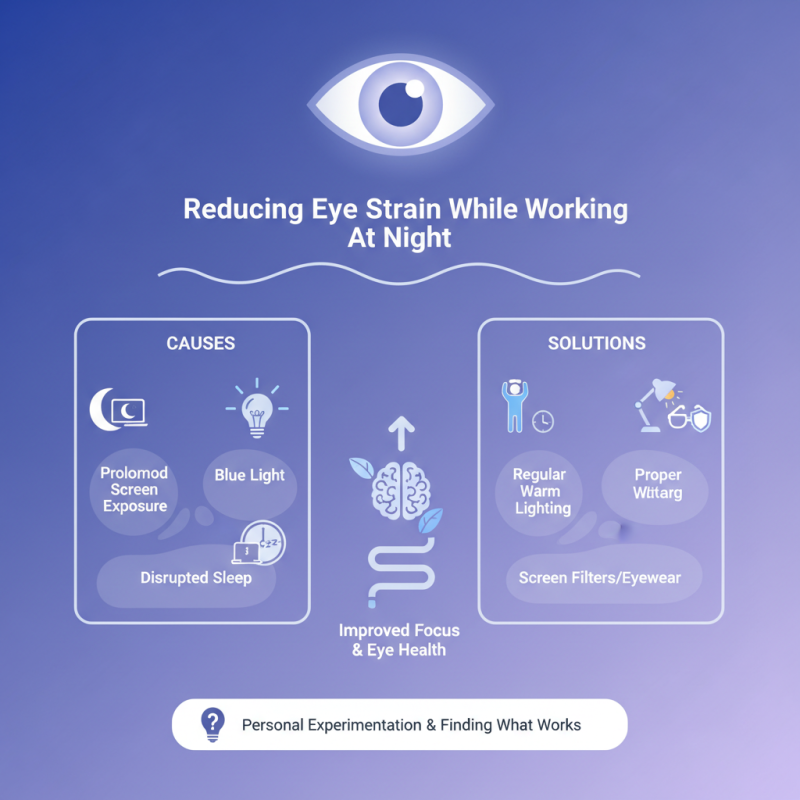
How to Reduce Eye Strain While Working at Night Effectively?

Understanding Eye Strain and Its Causes During Night Work

Eye strain is a common issue faced by many who work at night. Understanding its causes is crucial for effective management. According to the American Optometric Association, prolonged exposure to screens, reduced lighting, and insufficient breaks contribute significantly to eye strain. These factors can lead to discomfort, fatigue, and even headaches.

Working under artificial lighting often forces our eyes to strain harder than during daylight. The blue light emitted by screens can also disrupt sleep patterns. A report by the National Institute of Health shows that nearly 60% of night shift workers experience some level of eye discomfort.

To alleviate eye strain, consider these tips. Adjust your workspace lighting by using soft, warm lights. This can reduce glare and ease the burden on your eyes. Additionally, the 20-20-20 rule is effective: every 20 minutes, focus on an object 20 feet away for 20 seconds. Remember to blink frequently to keep your eyes moist. Simple adjustments can lead to a more comfortable night work experience.

How to Reduce Eye Strain While Working at Night Effectively?

Method Description Effectiveness Time to Implement
Use Blue Light Filters Apply blue light filters on screens to reduce eye strain. High Immediate
Adjust Screen Brightness Modify screen brightness to match the ambient light of your workspace. Medium 1-2 minutes
Take Regular Breaks Follow the 20-20-20 rule: every 20 minutes, look at something 20 feet away for 20 seconds. High Ongoing
Optimize Workspace Lighting Use soft, diffused light sources to reduce glare and shadows. Medium 5-10 minutes
Stay Hydrated Drink plenty of water to keep your eyes moist and prevent dryness. Medium Ongoing

Effective Lighting Solutions for Nighttime Work Environments

Effective lighting is crucial when working at night. Proper illumination minimizes eye strain and boosts productivity. Many people overlook the importance of lighting quality. A harsh overhead light can create glare, leading to fatigue. Instead, consider using softer, diffused lights. They can reduce harsh contrasts and provide a more comfortable working environment.

Task lighting is another valuable solution. A desk lamp with adjustable brightness can focus light directly onto your work area. This reduces the need for excessive ambient lighting, which may not always be effective. Warm white bulbs can enhance comfort and make tasks easier to see. Experiment with different types of bulbs to find the warmth that suits you best.

Incorporating natural light during the day can set a positive precedent. When night falls, try to replicate that ambiance. Use layered lighting—ambient, task, and accent—to create depth and reduce strain. Regular breaks are also essential. Step away from your screen every hour to give your eyes a rest. Maintaining ideal lighting and a balanced routine will help you work more efficiently at night.

How to Reduce Eye Strain While Working at Night Effectively?

This chart illustrates the effectiveness of various lighting solutions in reducing eye strain during nighttime work. The data represents the average eye strain levels reported by individuals using different lighting options.

Implementing Break Techniques to Alleviate Eye Fatigue

Working late into the night can lead to severe eye strain. Implementing effective break techniques is essential to alleviate this issue. One effective method is the 20-20-20 rule. Every 20 minutes, look at something 20 feet away for 20 seconds. This simple technique helps relax the eye muscles. You may not always remember to take breaks, especially when focused. Setting a timer on your phone reminds you to pause and refocus.

In addition to the 20-20-20 rule, try incorporating short breaks into your routine. Stand up, stretch, and walk around for a minute. This not only helps your eyes but also boosts circulation. You might find it challenging to break your workflow, but it's vital. Take a moment to close your eyes and breathe deeply. This can recharge your mind and enhance productivity, despite the initial distraction it might cause.

Creating an eye-friendly workspace can make a significant difference. Adjusting your screen brightness is crucial. Reduce glare and consider dimming ambient lights. While it’s tempting to work in a dark room, it strains your eyes more. Regularly reviewing your workspace setup can lead to improvements. It’s okay if you don’t get it right the first time. Experimenting helps you discover what truly works for your needs.

Eye Care Practices: Using the Right Tools and Techniques

Working late into the night can significantly strain your eyes. This is due to prolonged exposure to screens. According to a study by the American Academy of Ophthalmology, about 60% of adults report experiencing digital eye strain. Eye care practices are essential to mitigate these issues effectively.

Using the right tools can make a difference. Blue light blocking glasses help reduce glare from screens. Additionally, adjusting your monitor's brightness can help lessen strain. The ideal position is about an arm's length away and slightly below eye level. Ergonomics play a crucial role. A study by the Vision Council found that only 30% of individuals maintain proper posture when using digital devices. This often leads to increased discomfort.

Incorporating techniques like the 20-20-20 rule can also be beneficial. Every 20 minutes, take a 20-second break and focus on something 20 feet away. This practice is simple yet effective. However, many people forget to implement it consistently. Regular eye exams are vital too, as they can catch underlying issues early. Despite knowing these practices, many fail to prioritize them in their daily routine, reflecting a larger need for awareness in eye care.

Adjusting Your Workspace Ergonomics for Optimal Comfort

Creating an ergonomic workspace is essential for reducing eye strain, especially during night work. Start by adjusting your chair and desk height. Your eyes should be at the same level as the monitor’s top edge. This alignment helps to minimize neck strain while maintaining a comfortable angle for your eyes.

Lighting is crucial. Use soft, adjustable lights positioned behind your computer screen. This reduces glare and creates a balanced light environment. Consider adding a desk lamp with a warm tone to soften harsh overhead lighting. It is also vital to take regular breaks. Try the 20-20-20 rule: every 20 minutes, look at something 20 feet away for 20 seconds.

Monitor distance is another important factor. Ideally, your screen should be 20 to 30 inches away from your eyes. If this feels too close, reflect on your setup. Experimenting with these adjustments may yield better comfort. Sometimes, the solutions are not immediate, and ongoing adjustments can significantly help overall well-being.

FAQS

: Why is effective lighting important for nighttime work?

: Proper lighting minimizes eye strain and boosts productivity in nighttime environments.

What type of lighting is best to reduce glare?

Softer, diffused lights are better than harsh overhead lights. They create a comfortable working environment.

How can I use task lighting effectively?

An adjustable desk lamp can focus light directly on your work area, reducing the need for ambient lighting.

What is the 20-20-20 rule?

Every 20 minutes, look at something 20 feet away for 20 seconds. This helps relax eye muscles.

How can I create an eye-friendly workspace?

Adjust screen brightness, reduce glare, and avoid working in complete darkness. Regular reviews can lead to improvements.

What should I consider for my monitor placement?

Your screen should be 20 to 30 inches away from your eyes. Adjustments may improve comfort significantly.

How can natural light influence nighttime work?

Incorporating natural light during the day sets a positive tone. Replicating that ambiance at night can be beneficial.

What are effective break techniques to reduce fatigue?

Use short breaks to stretch and walk. Closing your eyes and breathing deeply can recharge your mind.

Are there specific bulb types that enhance comfort?

Warm white bulbs are often more comfortable. Experiment to find the warmth that suits you best.

Is it okay to make multiple adjustments to my workspace?

Yes, ongoing adjustments can lead to better comfort. It's fine if you don’t get it right immediately.

Conclusion

To effectively address the issue of how to reduce eye strain while working at night, it's essential to first understand the causes of eye strain. Night work often involves prolonged exposure to artificial lighting and screens, leading to increased fatigue. Implementing effective lighting solutions, such as using softer, indirect lights and adjusting brightness levels on screens, can significantly alleviate discomfort.

Additionally, incorporating regular break techniques, such as the 20-20-20 rule, helps in reducing eye fatigue. Eye care practices, including the use of proper eyewear and maintaining optimal screen distance, further promote eye health. Lastly, adjusting your workspace ergonomics can enhance comfort, allowing for a more productive nighttime work experience. By following these strategies, individuals can minimize eye strain and maintain overall visual well-being during late hours.

Liam

Liam

Liam is a dedicated marketing professional with a profound expertise in the industry, where he excels at highlighting the unique advantages of our core products. With a keen understanding of market trends and consumer needs, Liam frequently updates our company’s professional blog, providing......