Top Reasons to Use Warm Light vs Cool Light for Studying?

Time:2026-09-22 Author:Sienna
0%

Choosing the right study light is not merely a matter of personal taste. It affects visual comfort, alertness, glare, and evening sleep habits. This is why many students ask, “why use a warm light vs cool light for studying?” The answer depends on timing, task demands, room surfaces, and individual sensitivity.

Professional guidance supports a balanced approach. The Illuminating Engineering Society’s Lighting Handbook links suitable illuminance and glare control with better visual performance during reading and detailed work. EN 12464-1 commonly references approximately 500 lux for reading and writing areas, although the ideal level varies by age and eyesight. The CIE’s position on integrative lighting also explains that light influences non-visual responses, including alertness and circadian timing. Cool, brighter light may feel energizing during daytime revision. Warm light can feel gentler during late-night reading.

Still, the evidence does not prove that one color temperature always produces higher grades. That claim is too simple. A 2023 review in Sleep Medicine Reviews reported that evening exposure to short-wavelength light can affect melatonin and sleep timing, but responses differ between people. A student under harsh, blue-heavy light may become restless. Another may lose focus under dim amber light.

This guide compares warm and cool light through practical situations. Imagine a 4000K lamp beside a workbook at noon, then a 2700K lamp beside the same pages at 10 p.m. Brightness, glare, screen use, and sleep timing all matter. The best choice may be adjustable, not absolute.
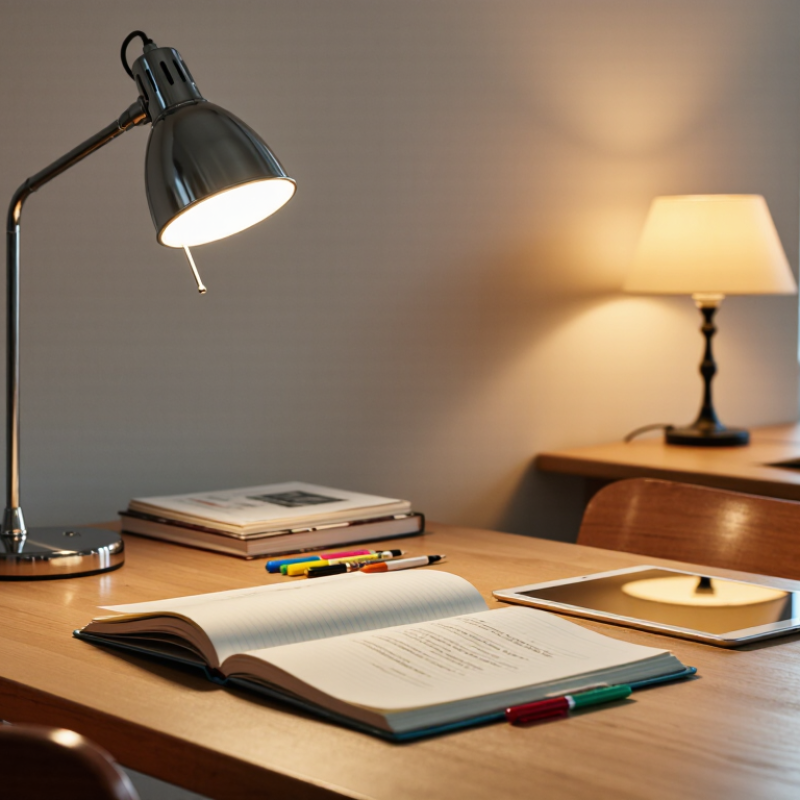
Top Reasons to Use Warm Light vs Cool Light for Studying?

What Warm Light and Cool Light Mean for Studying

Warm light and cool light describe color appearance, not temperature. Warm light usually ranges from 2700K to 3000K, producing a soft yellow glow. Cool light often ranges from 4000K to 6500K, appearing whiter or slightly bluish.

For studying, cool light can make a desk feel brighter and more alert. It may help during detailed tasks, such as reading small text, solving equations, or reviewing diagrams. However, brightness is not the same as quality. A very cool lamp can create glare on white paper and make tired eyes feel worse. Keep the light beside your dominant writing hand, not directly behind the page. That simple change can reduce distracting shadows.

Warm light feels gentler during evening study sessions. It can make a bedroom or quiet reading corner feel less harsh, especially when the room is already dim. Strong blue-enriched light late at night may interfere with the body’s sleep timing, so a warmer setting can be more comfortable before bed. Still, warm light may feel too dull for technical work. I once assumed warmer light always improved concentration, but I worked more slowly under a weak yellow lamp. My mistake was confusing comfort with visibility.

A practical approach is to use cooler, even light for demanding daytime work and warmer light for relaxed evening reading. Choose based on glare, contrast, and your own response. Your eyes will tell you.

How Light Color Affects Focus, Alertness, and Visual Comfort

Cool light can support alertness during demanding study sessions. The CIE S 026/E:2018 standard places melanopic sensitivity near 490 nanometres. This range strongly influences the body’s daytime light response. In practice, 4000–5000K light can make a desk feel sharper and more active. I notice fewer heavy eyelids during morning reading under this range. Still, brightness matters more than color alone.

The Illuminating Engineering Society commonly recommends about 300–500 lux for office-style visual tasks. That level can help students read small text without leaning toward the page. Excessive brightness creates glare, especially on glossy screens. Warm light, often around 2700–3000K, usually feels gentler in the evening. It may reduce visual harshness when studying for long periods. Comfort is not weakness.

The CIE’s 2019 position statement warns that blue-enriched light late at night may affect circadian timing. A cool lamp at 11 p.m. can improve alertness, but it may also make sleep harder. That trade-off deserves attention. Use neutral or cool light for daytime problem-solving, then shift warmer as bedtime approaches. Keep the lamp beside the screen, not directly behind it. Test both settings for several days. Personal response varies, and my first lighting choice was not always the best.

When Warm Light Is More Suitable for Study Sessions

Warm light is often more suitable for study sessions held in the evening. Its soft, yellow tone can make a desk feel calmer after a demanding day. This atmosphere may help students read, write, or review notes without feeling overstimulated. Light around 2700K to 3500K is commonly considered warm or neutral-warm. However, color temperature alone does not determine comfort.

I once studied under a very bright, cool-white ceiling light and developed eye strain within an hour. Switching to a warm desk lamp made the page feel gentler, especially during late reading. The difference was noticeable. Warm light can also reduce the harsh contrast between a bright desk and a dark room. Place the lamp beside your non-writing hand, and aim it toward the pages. This position helps limit shadows and reflected glare.

Warm light is not ideal for every task. Detailed drawing, technical diagrams, and long problem-solving sessions may require brighter, more neutral illumination. A dim amber lamp can make small text harder to see, which may encourage squinting. I have made that mistake myself. The room felt peaceful, but my notes became tiring to read. Keep the desk bright enough for clear vision, while lowering the surrounding lights. If sleep is a concern, avoid intense light close to bedtime and test a gentler setting. Personal comfort still matters more than a fixed rule.

Warm light, typically 2,700–3,000 K, is more suitable for evening study sessions because it creates a softer, calmer atmosphere and is commonly used in relaxing residential spaces. Cool light, typically 5,000–6,500 K, is more suitable for daytime studying when a brighter, more alert visual environment is preferred. Neutral light, around 3,500–4,000 K, provides a balanced middle option. These color-temperature ranges describe common lighting classifications and do not guarantee improved academic performance.

When Cool Light Supports Reading and Concentration

Cool light can support reading when a study space feels dim, yellow, or visually tiring. A neutral-to-cool white lamp, around 4000–5000 Kelvin, can make printed words appear sharper. It may also help students feel more alert during afternoon revision. In my experience, a clean white desk and even illumination reduce the need to squint at small notes.

Keep it controlled. Brightness matters more than color temperature alone. A strong lamp reflecting from glossy paper can create glare, while light aimed directly at the page may produce harsh shadows. Place the lamp slightly to the side, opposite your writing hand, and adjust it until the page looks clear without shining. The screen should remain comfortable, not dazzling.

Cool light is not ideal for every study session. Some people feel tense under very blue light, especially at night. Research on evening light also suggests that short-wavelength light may delay natural sleep signals. I would use cooler light for focused daytime reading, then choose softer, warmer illumination before bed. This is not a perfect rule. Personal sensitivity, room color, eyesight, and fatigue all change the result. Try one week of small adjustments, and record when your concentration improves or slips.

How to Choose the Right Study Light for Different Conditions

Choosing study light depends on the task, time, room, and screen use. The same lamp can feel clear at noon and harsh after midnight. For printed textbooks in a bright room, choose neutral to cool light around 3500–5000K. Keep the desk evenly lit, not merely bright. The Illuminating Engineering Society commonly places reading and writing near 300–500 lux in its lighting guidance. Aim near that range, then adjust for age, vision, and page contrast. Measure it at the book surface, not beside the lamp.

After sunset, warm light near 2700–3000K usually feels less stimulating. The CIE 2019 Position Statement notes that evening light exposure can affect circadian rhythms, depending on spectrum, timing, and duration. It does not make every cool lamp harmful. Reduce glare first. Place the light to the side, below eye level, and away from reflective screens. For laptop study, use moderate neutral light and lower screen brightness. A warmer lamp may suit handwritten notes, but it can make blue ink and fine diagrams look dull. Test both for ten minutes. Notice eye strain, shadow edges, and whether you keep leaning forward. No setting works perfectly. Personal comfort is useful evidence, but it is not a clinical measurement. Recheck the setup when seasons, prescription lenses, or study hours change.

FAQS

When is warm light suitable for studying?

Warm light works well for evening reading, writing, and reviewing notes. Its soft yellow tone can make a desk feel calmer. It usually ranges from 2700K to 3500K. Comfort matters more than a fixed number.

Can warm light reduce eye strain?

It may feel gentler during late reading. Warm light can also soften the contrast between a bright desk and a dark room. However, dim light may make small text harder to read. I made that mistake once.

Where should a warm desk lamp be placed?

Place it beside your non-writing hand. Aim the light toward the pages. This position can reduce shadows and reflected glare. Keep the paper clearly visible.

When is warm light unsuitable?

Detailed drawing, technical diagrams, and difficult calculations may need brighter light. Neutral illumination can reveal small lines more clearly. A peaceful desk is not always a practical desk.

When does cool light support concentration?

Cool or neutral-white light can help when a room feels dim or yellow. Light around 4000K to 5000K may make printed words appear sharper. It can also support alertness during afternoon revision.

How can cool light create glare?

A strong lamp can reflect from glossy paper. Direct light may also create harsh shadows. Place the lamp slightly opposite your writing hand. Adjust it until the page looks clear, not shiny.

Is cool light suitable for studying at night?

Not always. Very blue light may feel tense for some people. Evening exposure to short-wavelength light may delay natural sleep signals. Softer light may be better before bed.

How should students choose between warm and cool light?

Test small changes for one week. Record when concentration improves or slips. Use cooler light for focused daytime reading. Try warmer light during late evening sessions. Personal sensitivity still changes the result.

Conclusion

Understanding why use a warm light vs cool light for studying can help create a more effective and comfortable learning environment. Warm light has a soft, yellowish tone that feels relaxing and can be suitable for evening study sessions, creative work, or reading when you want to reduce visual strain and prepare for rest. However, it may feel less stimulating during demanding tasks that require prolonged alertness.

Cool light has a brighter, bluish-white appearance that can promote alertness, support concentration, and make text and details appear clearer. It may be especially useful for morning study, technical subjects, or work in rooms with limited natural light. The best choice depends on the time of day, the task, room brightness, and personal comfort. A balanced approach is to use brighter, cooler light when focus is essential and warmer light when relaxation and visual comfort matter more. Adjustable lighting can make it easier to adapt to changing study conditions.

Sienna

Sienna

Sienna is a skilled marketing professional with a deep expertise in our company’s core products and services. With a passion for innovation and detail, she plays a pivotal role in crafting insightful blog posts that not only highlight the unique features of our offerings but also provide valuable......